In this Canadian non-toxic spring cleaning guide, I’ll share my favourite natural household cleaners, chemical-free cleaning methods, and eco-friendly spring cleaning tips. Over the last few years, I’ve tested dozens of homemade disinfectant solutions and green cleaning brands in Canada, searching for the best ways to keep my home fresh without harmful chemicals. Some products worked wonders, while others didn’t live up to the hype—but through trial and error, I’ve built a solid routine that makes cleaning easier, safer, and more effective.
This article will walk you through my step-by-step routine, my go-to safe household cleaners, and easy DIY natural cleaning recipes for every room in the house. A clean home should never come at the cost of your health, and I’m here to help you make the switch to organic cleaning methods that actually work!
For more healthy cleaning tips, check out:
- 8 Best Smelling Non-Toxic All-Purpose Cleaners in Canada
- Your Daily, Weekly, Monthly Household Chores Checklist For Adults
- 8 Easy Ways To Do A Spring Refresh Of Your Home
This post contains affiliate links, which means I’ll receive a commission if you purchase through my link, at no extra cost to you. All listed prices are subject to change.

Full Non-Toxic Spring Cleaning Checklist for Canadian Homes
There’s something about spring cleaning that fills me with pure joy. I can feel my mood lifting, my stress melting away. It’s not just in my head either—science backs this up. Experts agree that a clean, organized home can reduce anxiety, improve focus, and even boost happiness levels. There’s a reason why decluttering and deep cleaning are so satisfying. It’s the same feeling as meal prepping—a task that some might see as mundane, but when approached with intention, becomes an act of self-care.
So, instead of dreading spring cleaning, why not romanticize it? Put on your favorite playlist, light a non-toxic candle, and enjoy the process.
Before you begin, there is one thing you need to keep in mind. Many conventional cleaning products do the opposite of what they promise. Instead of promoting health, they pollute our indoor air with harsh chemicals, volatile organic compounds (VOCs), and synthetic fragrances. These hidden toxins can trigger allergies, irritate the skin and lungs, and even mess with hormones. That “clean” smell many people associate with freshness? Often, it’s just an undisclosed blend of artificial fragrances and chemicals that lingers in the air long after the cleaning is done.
This is why Canadian non-toxic cleaning products matter. Natural household cleaners with ingredients like vinegar, baking soda, and castile soap are just as (if not more) effective than their chemical-laden counterparts.
In this non-toxic spring cleaning checklist, I’ll share my chemical-free cleaning methods, the best eco-friendly cleaning brands in Canada, and dozens of DIY natural cleaning recipes.
Step 1: Prepare for a Non-Toxic Spring Cleaning Routine
Before we dive into scrubbing and shining, let’s tackle the most important step of non-toxic spring cleaning: decluttering. After all, there’s no point in dusting around piles of stuff you don’t need, right? Clearing out the clutter first makes the actual cleaning faster, easier, and way more satisfying. Plus, when you declutter intentionally and sustainably, you can keep items out of landfills and give them a second life.
Instead of getting overwhelmed, break it down one category at a time:
- Clothing – If you haven’t worn it in a year, let it go. If it’s damaged beyond repair, repurpose it as cleaning rags!
- Paper Clutter – Old receipts, expired coupons, junk mail—time to recycle. Scan important documents digitally and shred the rest.
- Kitchen Items – That chipped mug and the three extra spatulas? Donate or repurpose them.
- Bathroom Products – Expired skincare, half-used bottles you never touch? Dispose of them properly (more on that below).
- Miscellaneous “Stuff” – Random cords, old electronics, decor you don’t love—out they go!
Declutter before you buy storage bins. The less you keep, the fewer bins you’ll need. It’s easy to fall into the “let’s-organize-the-mess” trap when the real solution is owning less in the first place.
How to Sort, Donate, Recycle, and Repurpose Items
Not all clutter is destined for the trash. Let’s make sure what you’re parting with goes to the right place:
SORT – As you declutter, create four piles: Keep, Donate, Recycle, Trash. Bonus: A “Repurpose” pile if you’re crafty!
DONATE – Gently used clothes, books, toys, and household goods can help others instead of collecting dust. Some great Canadian donation centers include:
- Value Village – Accepts clothing, accessories, and household items
- Salvation Army Thrift Stores – Helps fund community programs
- Diabetes Canada Clothesline – Free home pickup for clothing donations
- Habitat for Humanity ReStores – Perfect for furniture, appliances, and home improvement goods
RECYCLE – Many household items are recyclable if you know where to look. Some common recyclables:
- Electronics – Find drop-off locations at Recycle My Electronics Canada
- Textiles – Some retailers (like H&M) have textile recycling bins
- Expired Makeup & Skincare – Brands like MAC, Lush, and The Body Shop have take-back programs
REPURPOSE – Before tossing something, ask yourself: Can this have a second life?
- Old t-shirts? DIY cleaning rags
- Mason jars? Storage for bulk pantry items
- Worn-out sheets? Cut into reusable fabric gift wrap.
If an item is still useful but not donation-worthy, check out local Buy Nothing groups, Facebook Marketplace, or Freecycle to give it away for free!
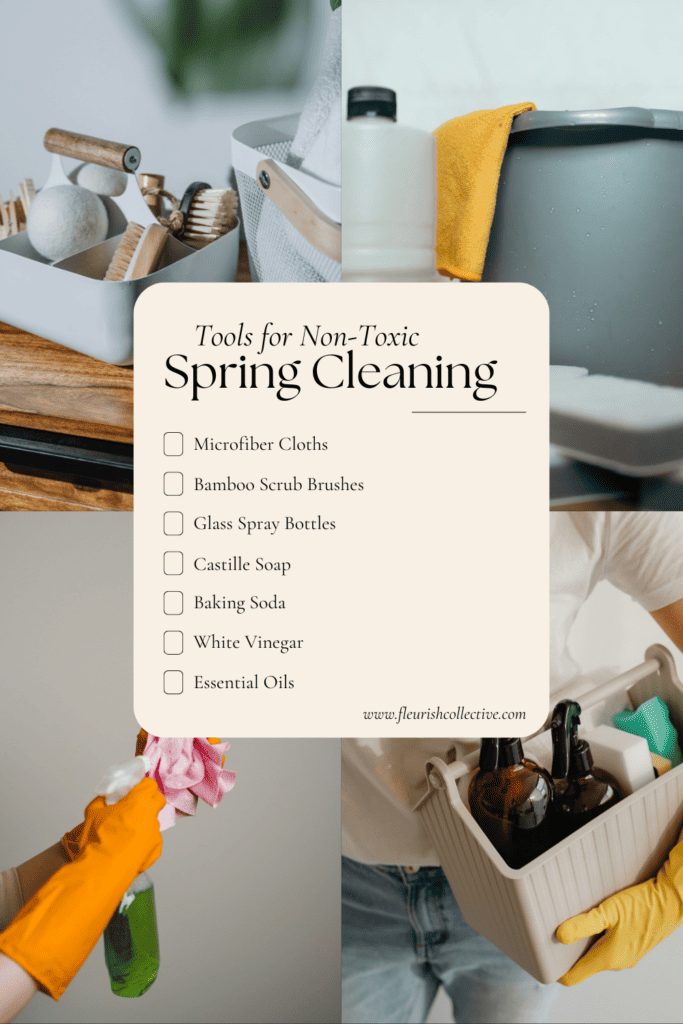
Step 2: Create a Non-Toxic Cleaning Toolkit
Before we jump into the list of the best non-toxic cleaning products Canada has to offer, let’s make sure that your spring cleaning checklist includes the right tools. With just a few eco-friendly essentials, you’ll have everything you need to ditch toxins, cut plastic waste, and still achieve that fresh, clean feeling.
1. Microfiber Cloths
These cloths are reusable, chemical-free, and ultra-effective at trapping dust, grime, and bacteria without needing harsh cleaners. Look for high-quality recycled microfiber cloths (like those from E-Cloth or Norwex) to reduce waste. Wash them without fabric softener (it coats the fibers and reduces absorbency).
2. Scrub Brushes
A solid natural fiber scrub brush like ANTYA replaces plastic sponges (which harbour bacteria and shed microplastics). They are ideal for scrubbing sinks, tubs, grout, and dishes. I always go for bamboo handles with coconut fiber or sisal bristles and biodegradable loofah sponges.
3. Glass Spray Bottles
DIY cleaning solutions and natural household cleaners in bulk work best in durable, reusable glass spray bottles that won’t leach chemicals (unlike plastic bottles). Add dark amber glass options to your non-toxic spring cleaning checklist, if you’re storing essential oils in your cleaners (it prevents them from degrading).
4. Vacuum Cleaner
I can’t stress enough the importance of having a great quality vacuum cleaner. There are many top-rated options online for everything – whether that’s cleaning pet hair, high-pile carpets, hardwood floors, and even sofas. If you don’t want a manual option, I also have a guide to the best robot vacuum cleaners in Canada for every surface.
5. The Ultimate Natural DIY Cleaning Staples
Let’s talk about ingredients. If you want to make your own powerful, non-toxic cleaners in Canada, these five pantry staples will do it all—from disinfecting to degreasing to deodorizing.
Castile Soap – The gentle, plant-based soap that can clean just about anything (dishes, counters, floors, even your dog). Look for Dr. Bronner’s or Whole Naturals. They offer amazing non-toxic spring cleaning products at a very affordable price.
Baking Soda – A natural abrasive cleaner that scrubs, deodorizes, and neutralizes odors. Perfect for sinks, tubs, and carpets.
White Vinegar – A natural disinfectant that cuts grease and removes buildup. Great for windows, mirrors, and descaling appliances. (Avoid on stone surfaces like granite & marble!)
Essential Oils – Even though they are a great non-toxic way to scent your home, they can do waaay more than that! Many oils have antibacterial, antifungal, and antiviral properties.
- Lemon – Degreaser & odor eliminator
- Tea Tree – Antibacterial & mold-fighter
- Lavender – Calming & antibacterial
Hydrogen Peroxide – The safe alternative to bleach for disinfecting surfaces, cutting mold, and whitening grout.

Room-by-Room Non-Toxic Spring Cleaning Routine
You can get your entire home sparkling clean with natural household cleaners that are safe, effective, and eco-friendly. This step-by-step non-toxic spring cleaning routine will walk you through each room of your home, using only chemical-free cleaning methods and homemade disinfectant solutions.
1. Kitchen
The kitchen is one of the most used (and messiest) spaces in any home. Between food spills, grease buildup, and forgotten leftovers in the fridge, this area needs special attention. Fortunately, you don’t need harsh chemical cleaners to get your kitchen gleaming. Here’s how to deep clean it in a non-toxic way!
Counters & Surfaces:
- The simplest eco-friendly spring cleaning tip is to use a simple vinegar and water mix (1:1 ratio) for cutting grease and disinfecting. You should ALWAYS avoid vinegar on marble, granite, and other natural stones—it can erode the surface. Instead, mix castile soap with warm water for a gentle, stone-safe cleaner. For tough messes, sprinkle baking soda, let it sit, then wipe clean.
Sink & Drains:
- To deodorize and unclog drains, pour ½ cup of baking soda down the drain, followed by 1 cup of vinegar. Let it fizz for 10 minutes, then flush it with boiling water. For a stainless steel sink, sprinkle baking soda, scrub with a damp cloth, then rinse. Add a few drops of lemon essential oil for a fresh scent!
Oven Cleaning (Skip the Toxic Oven Cleaners!):
- I know ovens always require a bit of extra care. Mix ½ cup baking soda + water into a paste. Spread over oven surfaces (avoiding heating elements), let sit overnight, and wipe away with a damp cloth. Stubborn grime? Just spray with vinegar, let it foam, then scrub.
Stovetop & Range Hood:
- This one is simple. Use a castile soap + warm water solution to cut grease on stovetops. If you have range hood filters, a good idea is to soak them in hot water + baking soda for 15 minutes, then scrub them.
Fridge & Freezer:
- I have a great non-toxic fridge-cleaning spray recipe that works every time! Mix 1 cup water + 1 cup vinegar + 1 tbsp baking soda. Spray and wipe down the shelves. Place an open jar of baking soda in the fridge to absorb odors. To prevent cross-contamination, make it a habit to store raw meats on the bottom shelf and keep fruits/veggies separate.
Dishwasher
- When we thing of non-toxic spring cleaning, the dishwasher rarely comes to mind. But, it’s still one of the dirtiest parts of the kitchen. If you want to give your dishwasher a deep clean, run a cycle with 1 cup of vinegar in the top rack. Then, sprinkle baking soda at the bottom and run another hot cycle.
Best Non-Toxic Kitchen Cleaning Products in Canada
- Attitude – Plant-based, biodegradable cleaners (Made in Canada)
- The Unscented Company – Fragrance-free, hypoallergenic cleaning products
- Ecover– Non-toxic, eco-friendly dishwashing tablets
- Tru Earth – Zero-waste, concentrated cleaning strips

2. Bathroom
The bathroom is one of the germiest places in the house. But that doesn’t mean you need to blast it with toxic fumes and chemical cleaners. Most commercial bathroom cleaners contain ammonia, chlorine bleach, and artificial fragrances, which can irritate your lungs and skin (and are terrible for the environment).
Instead, let’s go all-natural with DIY natural cleaning recipes and chemical-free cleaning methods that are just as effective as conventional cleaners.
Best Non-Toxic Bathroom Cleaners Available in Canada
Want ready-made but still safe household cleaners? These top eco-friendly brands in Canada offer affordable natural cleaning alternatives:
- Attitude – A Biodegradable, non-toxic cleaner spray formulated in Canada
- True Earth – Eco-friendly toilet bowl cleaner strips
- Method– Tub and tile cleaners
- Seventh Generation – Natural bathroom cleaners and non-toxic toilet bowl cleaners
P.S. I’ve also shared 25+ eco-friendly & non-toxic bathroom swaps in Canada for a truly sustainable bathroom.
Mold & Mildew Removal (Hydrogen Peroxide vs. Bleach)
Mold and mildew love damp spaces, making bathrooms a prime target. Many people turn to bleach, but here’s the thing. Bleach doesn’t actually kill mold at the root—it only lightens it!
Hydrogen peroxide (3%) is a better, non-toxic alternative that kills mold spores and prevents regrowth.
DIY Non-Toxic Mold Spray:
- Mix 1 part hydrogen peroxide with 1 part water in a spray bottle.
- Spray directly onto moldy surfaces (tile grout, shower corners, etc.).
- Let sit for 15 minutes, then scrub with a brush and rinse.
Reduce humidity by running a vent fan or placing an open container of baking soda in damp areas to absorb moisture.
Toilet Bowl Cleaner (DIY Recipe)
Toilet bowl cleaners are amongst the most harmful chemicals in a household. Skip the harsh toilet bowl cleaners loaded with chlorine and synthetic dyes. This DIY toilet cleaner is just as powerful—without the toxins!
DIY Natural Toilet Bowl Cleaner Recipe:
- 1/2 cup baking soda (deodorizer & scrub)
- 1/4 cup castile soap (plant-based cleaner)
- 10 drops of tea tree essential oil (antibacterial)
- 1/4 cup white vinegar (disinfectant & stain remover)
How to Use:
- Sprinkle baking soda into the toilet bowl.
- Add castile soap and essential oil.
- Pour in vinegar (it’ll fizz!), then scrub with a toilet brush.
- Flush and enjoy your sparkling-clean toilet—without toxic fumes!
For stubborn stains, let the mixture sit for 15-30 minutes before scrubbing.
Mirror & Glass Cleaning (DIY Streak-Free Solution)
Forget Windex—most glass cleaners contain ammonia, which can irritate your lungs. Instead, use this homemade, non-toxic mirror cleaner for a streak-free shine.
DIY Streak-Free Glass Cleaner:
- 1 cup distilled water (prevents streaks)
- 1/4 cup white vinegar (cuts grime & disinfects)
- 1 tbsp cornstarch (reduces streaking)
- Optional: 5 drops of lemon essential oil (for a fresh scent)
How to Use:
- Shake well before spraying onto mirrors or windows.
- Wipe with a microfiber cloth or crumpled newspaper for a streak-free finish!
Shower & Bathtub Cleaning (Soap Scum & Hard Water Stains)
Hard water stains, soap scum, and mildew can turn your tub into a grime magnet. But you don’t need harsh scrubbing powders or chemical-laden sprays to fix it! This DIY is always a part of my own non-toxic spring cleaning checklist.
DIY Soap Scum Remover:
- 1/2 cup baking soda (gentle abrasive)
- 1/4 cup white vinegar (dissolves buildup)
- Juice of 1 lemon (cuts grease & brightens)
How to Use:
- Sprinkle baking soda over the tub and tiles.
- Spray with vinegar and lemon juice (it will fizz!).
- Let sit for 5 minutes, then scrub with a natural fiber brush.
- Rinse thoroughly with warm water.
3. Bedroom
Dusting Without Chemicals
Dust accumulates quickly in bedrooms, especially on surfaces like dressers, nightstands, and baseboards. Many commercial dusting sprays contain synthetic fragrances and silicones, which can leave behind harmful residues.
DIY Dusting Spray
A simple, homemade dusting spray can effectively trap dust while leaving a fresh scent.
- 1 cup distilled water
- 1/4 cup white vinegar (removes grime)
- 1 tablespoon olive oil (polishes wood naturally)
- 5-10 drops of lemon or lavender essential oil (antibacterial and fresh-smelling)
Shake well before use and apply with a microfiber cloth. For dusting electronics, skip the oil and use a dry microfiber cloth to avoid streaks.
You can also easily reduce dust buildup by vacuuming carpets and rugs at least once a week with a vacuum that has a HEPA filter.
Mattress Cleaning to Remove Dust Mites and Odors
A mattress can harbour dust mites, sweat, and bacteria, which can impact sleep quality. Instead of using chemical sprays, a baking soda-based cleaner is an effective, natural way to refresh it.
DIY Mattress Refresher
- 1 cup baking soda (absorbs odors)
- 10 drops essential oil (lavender for relaxation, eucalyptus for antibacterial properties)
Sprinkle the mixture over the mattress, let sit for at least 30 minutes, then vacuum thoroughly.
For stubborn stains, mix 1/4 cup hydrogen peroxide with 1 tablespoon baking soda and a drop of liquid castile soap, apply to the stain, and blot with a clean cloth.
Non-Toxic Laundry Tips for Your Pillow & Bedding
Many laundry detergents contain synthetic dyes, fragrances, and harsh chemicals that can linger on fabric and irritate sensitive skin. A non-toxic detergent is a safer choice for washing sheets, pillowcases, and blankets. After testing dozens of options, I’ve created a list of the clean laundry detergent brands In Canada that actually work and smell amazing!
Best Non-Toxic Laundry Detergents in Canada
- Mrs. Meyer’s – Hypoallergenic, eco-friendly detergent liquid
- Meliora – Biodegradable, concentrated dry powder
- BLUELAND – Zero-waste and plastic-free detergent tablets
Wash your bedding in hot water to eliminate dust mites and allergens. For extra freshness, add 1/2 cup white vinegar to the rinse cycle—it softens fabrics and removes detergent residue naturally.
For yellowed pillows, soak them in hot water, baking soda, and hydrogen peroxide before washing to brighten them without bleach.

4. Living Room
The living room is where we spend a lot of time relaxing, entertaining, and unwinding. But between dust, pet dander, and chemical residues, it can also be one of the most polluted areas in the home.
Use a Non-Toxic Furniture Polish
Many store-bought furniture polishes contain silicones and artificial fragrances that can leave behind a sticky residue. A simple DIY wood cleaner will clean and condition wooden surfaces naturally.
DIY Wood Polish Recipe
- 1/4 cup olive oil (nourishes and protects wood)
- 1/4 cup white vinegar (cleans and removes buildup)
- 5-10 drops of lemon essential oil (natural degreaser and antibacterial)
How to Use:
- Mix ingredients in a spray bottle or bowl.
- Apply a small amount to a microfiber cloth.
- Wipe down wooden furniture in the direction of the grain.
- Buff with a dry cloth for a natural shine.
A quick tip for deeper wood conditioning is to replace olive oil with fractionated coconut oil, which doesn’t go rancid as quickly.
Carpet & Upholstery Cleaning
Carpets and sofas trap dust, odors, and allergens, making them a major contributor to poor indoor air quality. Instead of synthetic carpet powders, this homemade deodorizer naturally freshens up fabric surfaces. I have created a whole guide on how to clean your couch naturally at home.
DIY Carpet & Upholstery Deodorizer
- 1 cup baking soda (absorbs odors)
- 10 drops lavender or eucalyptus essential oil (natural antibacterial)
How to Use:
- Sprinkle evenly over carpets, rugs, or fabric furniture.
- Let sit for 30 minutes to absorb odors.
- Vacuum thoroughly.
For stains, mix 1/2 cup club soda with 1 tablespoon castile soap, dab onto stains, and blot with a clean cloth. For tough stains, add a little hydrogen peroxide for extra cleaning power.
Eco-Friendly Electronics Cleaning
Electronics like TVs, computers, and phones attract dust and fingerprints, but harsh ammonia-based cleaners can damage screens. Here’s a gentle, non-toxic cleaner that removes smudges without leaving streaks.
DIY Streak-Free Electronics Cleaner
- 1/2 cup distilled water (prevents streaks)
- 1/2 cup white vinegar (cuts grease)
- Microfiber cloth (soft, lint-free cleaning)
How to Use:
- Lightly dampen a microfiber cloth with the solution.
- Gently wipe screens and plastic surfaces.
- Buff with a dry cloth for a streak-free finish.
Tip: Never spray liquid directly onto electronics—apply it to the cloth first to prevent moisture damage.
Houseplant Care for Better Air Quality
You’ve probably never thought of it, but plants should absolutely be a part of your non-toxic spring cleaning checklist. Houseplants naturally filter indoor air, reducing toxins like formaldehyde, benzene, and carbon dioxide. But dusty leaves can block photosynthesis, reducing their air-purifying benefits.
How to Clean Houseplants
- Wipe large leaves with a damp microfiber cloth.
- Rinse smaller plants under lukewarm water.
- Trim dead leaves and rotate plants for even sunlight exposure.
Best Air-Purifying Houseplants
- Snake Plant (absorbs toxins, releases oxygen at night)
- Peace Lily (filters formaldehyde and benzene)
- Aloe Vera (removes VOCs and doubles as a skin remedy)
- Spider Plant (great for removing carbon monoxide)
5. Floors & Windows
Non-toxic spring cleaning isn’t complete without sparkling floors and streak-free windows. Since these surfaces cover so much space in your home, using non-toxic cleaning products is essential for maintaining a healthy indoor environment—especially for kids, pets, and anyone with allergies.
Best Non-Toxic Floor Cleaners for Hardwood & Tile Floors in Canada:
- Attitude Floor Surface Cleaner – A Canadian-made, plant-based option with a refreshing citrus scent.
- Nature Clean Floor Cleaner Strips – Biodegradable and made with essential oils.
- Aunt Fannie’s Ultra Concentrated Floor Cleaner – A gentle yet effective formula safe for pets and kids.
- Method Hardwood Floor Cleaner – A versatile, concentrated soap that can be diluted for mopping.
DIY Floor Cleaner Recipes
If you prefer a DIY approach, you can whip up a homemade cleaning recipe that’s simple, effective, and free from mystery ingredients.
- 2 cups warm water
- ½ cup white vinegar (a natural disinfectant)
- 1 tablespoon castile soap
- 5 drops essential oil (tea tree, lemon, or lavender for a fresh scent)
Mix in a spray bottle or bucket, then mop as usual. This solution is safe for most hard surfaces, but if you have unfinished wood floors, skip the vinegar—it can be too harsh over time. Instead, use a mixture of castile soap and warm water for gentle cleaning.
Streak-Free Window Cleaning Solution
Tired of streaky windows that still look foggy after cleaning? The secret isn’t elbow grease—it’s the right chemical-free cleaning method. Many store-bought glass cleaners contain ammonia, which isn’t just harsh on your lungs but also unsafe for pets. Here’s a homemade disinfectant solution for windows that leaves them crystal clear.
- 2 cups distilled water (helps prevent streaks)
- ¼ cup white vinegar (removes grime and kills bacteria)
- 1 tablespoon cornstarch (yes, really—it helps prevent streaking!)
- 5 drops lemon or orange essential oil (optional for scent)
Shake well and spray onto windows, then wipe with a microfiber cloth or newspaper for a spotless finish. Avoid cleaning windows in direct sunlight to prevent streaks from forming too quickly.
This Was My Canadian Non-Toxic Spring Cleaning Guide
There you have it, my full non-toxic spring cleaning checklist. Sure, conventional cleaners promise a sparkling finish, but at what cost? Many of them leave behind toxic chemicals that linger in the air, cling to surfaces, and even find their way into the water supply. The irony? The very products meant to make our homes “clean” could be polluting them instead. Take a closer look at the labels on traditional cleaners, and you’ll find ingredients like phthalates, ammonia, chlorine, and triclosan—all known to cause health issues.
You don’t need harsh chemicals to get a deep, satisfying clean. Switching to non-toxic cleaning products in Canada means fresher air, fewer health risks, and a much smaller environmental footprint. By choosing natural household cleaners, you’re helping to protect waterways, reduce plastic waste, and create a safer home for your loved ones.
And if you’re into DIY natural spring cleaning recipes, even better! They’re easy to make, incredibly effective, and cost a fraction of what you’d pay for conventional products.