This is my step-by-step daily SPF routine that I use religiously every single morning. It’s true that I haven’t always been so invested in my SPF skin routine. There was a time when my non-toxic skincare ended at moisturizer. No SPF in sight, unless you count the beach days when I’d slather on whatever was in the bottom of my tote bag. But now? I don’t skip my SPF skincare routine ever, even if I’m just popping out for an iced coffee. Granted, perfecting your SPF morning routine isn’t always easy. Between trying to get out the door on time, wrestling with kids, answering emails, or just dealing with life, adding another step to your already-packed skincare lineup can feel like a hassle. But here’s the thing: your SPF makeup routine doesn’t have to be complicated to be effective. Once you find the products that work for you, it becomes second nature, like brushing your teeth or scrolling TikTok before bed.
In this guide, I’ll share my personal SPF routine, including beauty and skincare staples that I use on a daily basis.
For more skincare and beauty favourites, check out the:
- Best Clean Sunscreen Brands in Canada
- Top Clean Skincare Brands on Sephora Canada
- Best Non-Toxic Moisturizers in Canada
- Best Hydrating Hair Masks in 2025
- Non-Toxic Shampoo Brands in Canada
This post contains affiliate links, which means I’ll receive a commission if you purchase through my link, at no extra cost to you. All listed prices are subject to change.

The Daily SPF Routine I Swear By Every Morning
The truth is that once we start aging out of our teens and into our grown-up skin (hello 30s and beyond), things get real. We start noticing fine lines, dark spots, and that “sun-kissed glow” starts to feel more like “sun-damaged oops.” And let’s not sugarcoat it, sun damage isn’t just about vanity. It’s a serious health concern.
According to the Canadian Cancer Society, 1 in 59 Canadian men and 1 in 73 Canadian women will be diagnosed with melanoma skin cancer in their lifetime. And those numbers don’t even include non-melanoma types, like basal cell carcinoma, which are even more common and often sneak under the radar. But it’s not just about cancer. Overexposure to UV rays is one of the top causes of:
- Premature aging (aka wrinkles and sagging skin)
- Hyperpigmentation and dark spots
- A weakened skin barrier (which can lead to dryness and irritation)
And unlike a lot of other health issues that can sneak up on us, no matter how many green smoothies we drink, sun damage is one of the few things we can actually prevent. All it takes is following an SPF skincare routine. That’s it.
Cloudy out? Cold? Still need your daily SPF routine. Up to 80% of UV rays pass through clouds, and snow reflects sunlight, increasing UV exposure. Dermatologists agree: consistent, year-round sunscreen use is one of the most powerful tools we have to prevent premature aging and skin cancer.
So, daily SPF use—rain or shine—should be a non-negotiable part of your SPF skin routine.
What Is SPF, Anyway?
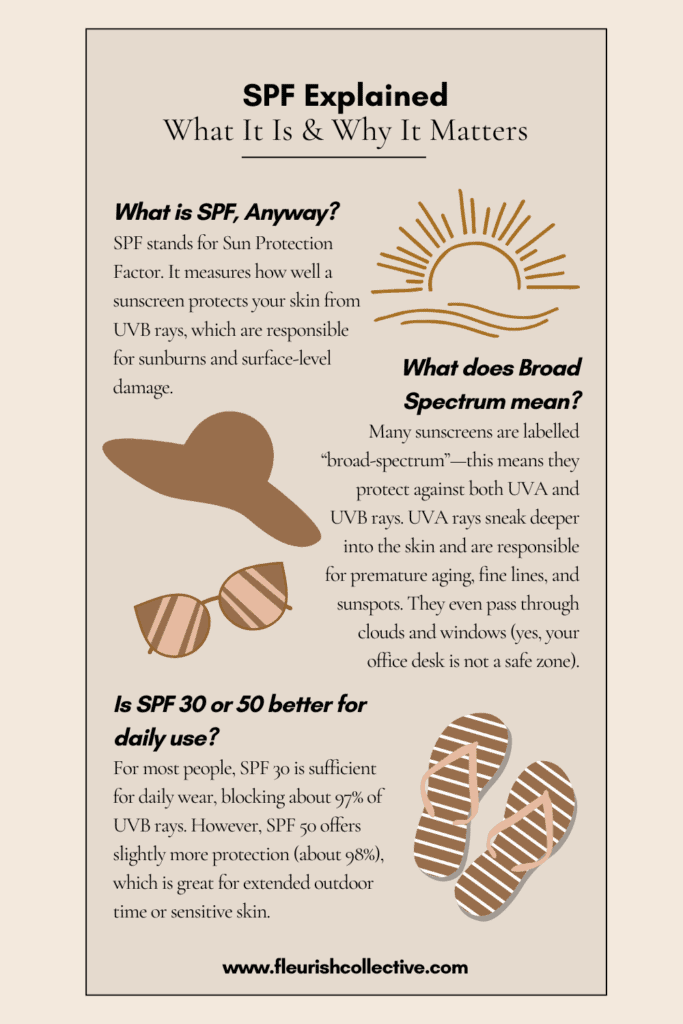
SPF stands for Sun Protection Factor. It measures how well a sunscreen protects your skin from UVB rays, which are responsible for sunburns and surface-level damage. For example, if your skin normally burns after 10 minutes in the sun, SPF 30 would (in theory) give you 30 times that protection—about 300 minutes.
But that’s in a lab setting. Real life = sweat, swimming, and missed spots. So regular reapplication is key (we’ll get to that in your daily SPF routine soon!).
Quick Fact: UVB = B for burning. UVA = A for aging. You need protection from both.
What is Broad-Spectrum SPF?
You’ll want to look for sunscreens labeled “broad-spectrum”—this means they protect against both UVA and UVB rays. UVA rays sneak deeper into the skin and are responsible for premature aging, fine lines, and sunspots. They even pass through clouds and windows (yes, your office desk is not a safe zone).
According to the Skin Cancer Foundation, broad-spectrum protection significantly reduces your risk of skin cancer and long-term skin damage. So when you’re building your SPF skincare routine, make sure that label is front and center.
Choose the Right SPF Level for Your Daily Routine
- For your SPF face routine and general daily wear? SPF 30 is the sweet spot.
- Planning a hike, beach day, or festival weekend? Level up to SPF 50 or higher—and don’t forget to reapply every two hours.
- For lips, ears, and other sensitive spots, go for high-protection formulas (yes, they make lip balm with SPF 30+, and yes, you need it).
Now that you know all the details, let’s get into the SPF skin routine that I personally use to protect my face and body from the sun.

My Step-by-Step Daily SPF Routine for Morning Sun Protection
Step 1: Hydrating SPF Moisturizer
Every solid SPF routine starts the same way I start my morning—hydrated, protected, and ready to face (literally) whatever the day throws my way.
Right after cleansing and toning, I go in with a broad-spectrum SPF moisturizer. Ideally, you need an SPF 30 or higher. I always reach for my La Roche Posay sunscreen. It’s lightweight, unscented, and has been extensively tested and dermatologist approved for sensitive skin. And this isn’t just for your cheeks. Apply it generously to your face, neck, and décolletage. These areas soak up the sun even if you’re just running errands or working near a sunny window. Don’t forget the ears and around your eyes either (just choose a non-irritating formula for those delicate zones!).
Alternatively, if you’re looking for a non-toxic option, the ATTITUDE mineral sunscreen with zinc oxide is a great one. It’s EWG VERIFIED, vegan, cruelty-free, and unscented. Why mineral? It sits on top of your skin and physically reflects UV rays, unlike chemical sunscreens that absorb and neutralize them (which can irritate sensitive skin or trigger breakouts).
Give your sunscreen 5–10 minutes to sink in before applying makeup. Rushing this step can cause pilling (aka that annoying peeling effect) or reduce coverage.
P.S. Have a look at my favourite non-toxic moisturizers for dry skin.
Step 2: Layer SPF in Makeup Products
SPF-Infused Primer or BB Cream
Did you know that you can layer your SPF skincare routine with beauty products that do double-duty? A recent study found that layering SPF-containing cosmetics can improve UV protection when used correctly. So yes, your makeup routine can actually help your daily SPF routine
Before you grab your foundation brush, smooth on a primer or BB cream with built-in SPF. It boosts your protection and helps your makeup last longer. I always look for products labeled “broad-spectrum” and SPF 30+. I’d highly recommend going for the Hueguard® 3-in-1 Mineral Primer Broad Spectrum SPF 30. It will protect you from harmful UVA/UVB rays and blue light and prep the skin for what comes next.
Foundation or Tinted Moisturizer with SPF
Next up in my SPF face routine is either a foundation or a tinted moisturizer that includes SPF. While this step shouldn’t replace your dedicated sunscreen, it definitely adds an extra layer of protection, especially in those “oops-I-forgot-to-reapply” moments. The Tower 28 SunnyDays Tinted SPF 30 is a fantastic option. Especially if you have sensitive skin like me, this formula is 100% safe and accepted by the National Eczema Association. Plus, you can find it in 17 flexible shades available on the website.
SPF Setting Spray or Powder
Here’s the most underrated formula of any SPF makeup routine: SPF setting products. After finishing your makeup, lock everything in with an SPF setting spray or translucent powder that offers sun protection. Not only does it help reduce shine and blur pores, but it also adds another thin but mighty barrier against UV rays. I love using the innisfree powder SPF for midday reapplication, especially if I’m already wearing makeup. It’s quick, mess-free, and keeps my skin looking matte and fresh instead of cakey. It’s a Korean, talc-free, sebum-absorbing translucent powder infused with Jeju Island minerals that keeps skin looking smooth and matte.
Step 3: Lip Balm with SPF 15 or Higher
Your lips might be small, but when it comes to sun protection, they need big love. Most of us remember to apply sunscreen to our cheeks or shoulders, but our lips are often left high and dry (literally). That’s why lip protection is a must in any complete SPF skincare routine. Just like your sunscreen for the face and body, you want a non-toxic, mineral-based lip balm with SPF 15+, and make it part of your SPF morning routine. Avoid chemical UV filters like oxybenzone or octinoxate, which are known to be irritating and can harm marine ecosystems. Reef-safe = skin safe + ocean safe.
I never leave the house without this one. The Attitude Tinted SPF 30 Lip Balm is a triple threat: sun protection, rich hydration, and just a subtle pop of color. Because it’s infused with Phytoglycogen, which is clinically proven to boost skin hydration + glow, it leaves my lips feeling extra smooth and plump. It glides on silky smooth, gives you a hint of rosy tint without stickiness.
You can find more clean makeup brands and Sephora, here.
Step 4: Full Body Protection
Let’s talk about the SPF routine for the parts we all forget. Hands, feet, shoulders, and the back of your neck. These areas catch more sun than we realize, especially while driving, walking, or sitting near windows (yep, UV rays totally sneak through glass). Even if your daily SPF routine is solid for your face, don’t skip these body touchpoints. I always apply my Blue Lizard Reef Safe Sunscreen to the backs of my hands and reapply after washing or using hand sanitizer (which strips away sun protection faster than you’d think). Whether you’re rocking sandals or tossing your hair up, a thorough SPF skin routine means giving every inch of your skin the love and coverage it deserves.
Step 5: Sun-Smart Clothing
Your daily SPF routine doesn’t end with skincare—it’s also about what you wear. I like to think of my clothing as my first physical SPF barrier. Lightweight, UPF-rated fabrics (that’s Ultraviolet Protection Factor) offer serious sun defence without sacrificing style.
On sunny days, I reach for long sleeves, loose, breathable layers, and always throw on a wide-brimmed hat or bucket hat made with sun-blocking materials—they keep both your scalp and face shaded. You can check out Willit on Amazon or Columbia’s sun protection lineup.
And let’s not forget polarized, UV-blocking sunglasses! Not only do they shield your eyes, but they also protect the delicate skin around them, one of the first places to show signs of sun damage. Integrating sun-smart fashion into your SPF skincare routine is just another way to level up your protection game while keeping things chic and sun-safe.
Step 6: Evening Aftercare
Just like your morning SPF routine sets the tone for protection, your nighttime ritual is all about repair. After a full day of wearing SPF, makeup, and maybe a little city grime, it’s so important to cleanse your skin thoroughly—but gently. I use a non-stripping, clean cleanser from Skin Essence Organics to melt away sunscreen and makeup without disrupting my barrier. Then, I follow up with a hydrating moisturizer from BKND rich in antioxidants to help counteract any sneaky UV exposure that slipped through. Ingredients like niacinamide or vitamin C are my nighttime must-have—they brighten, soothe, and support your skin’s natural repair process while you sleep.
More Ways to Protect Your Skin Beyond Having an SPF Skin Routine
First and foremost, always seek out shade, especially between 10 AM and 4 PM, when UV rays are at their fiercest. Whether you’re lounging at the park or walking the dog, grab a seat under a tree or pop open that cute sun umbrella—it counts! I know that easier said than done when you are on vacation or exploring a new city during summer, but try to do your best – and always wear UPF-rated fabrics.
Let’s please ditch the tanning beds (seriously, they’re so 2005 and so harmful). They can increase your risk for skin cancer, damage, and deplete your immune system. Opt instead for non-toxic sunless tanners for that golden glow, without the UV damage.
Post-sun, your daily SPF routine isn’t quite done. Help your skin recover by applying pure aloe vera gel, which cools and calms redness, or go for antioxidant-rich after-sun balms to repair and replenish. I use the Beauty By Earth organic after-sun gel, but you can find dozens of options on Amazon.
Another smart move is to plan your outdoor adventures wisely. Aim for early mornings or late afternoons when UV levels dip a bit lower (you can even check your local UV index before heading out—there’s an app for that). And don’t forget about window protection—whether you’re working by a sunny window or on a long drive, UV-blocking window film or driving gloves can help keep unintentional exposure in check.

FAQs About SPF Skincare Routine
Should I use SPF in the morning?
Yes, always apply SPF in the morning—UV rays are present from sunrise, even on cloudy days. Daily use helps prevent sunburn, premature aging, and long-term skin damage. Incorporating SPF into your morning routine is essential for both outdoor and indoor exposure (hello, window light!). It’s a non-negotiable step in any SPF skincare routine.
When to put SPF on in the routine?
SPF should be the last step in your skincare routine before applying makeup. After cleansing, toning, and moisturizing, apply sunscreen generously. Give it 5–10 minutes to fully absorb before layering on any makeup. This ensures the SPF forms an even, protective layer. Skipping this order can reduce its effectiveness.
Is SPF before or after moisturizer?
SPF goes after moisturizer. Your moisturizer hydrates and preps the skin, while your sunscreen creates a shield on top. If you’re using a combined SPF moisturizer, that can simplify the process. But if you’re layering, always finish with SPF. This helps maximize both moisture and UV protection.
Is SPF 30 or 50 better for daily use?
For most people, SPF 30 is sufficient for daily wear, blocking about 97% of UVB rays. However, SPF 50 offers slightly more protection (about 98%), which is great for extended outdoor time or sensitive skin. The key is proper and consistent application. Both are effective when used correctly. Choose what suits your lifestyle and reapply every 2 hours when outdoors.
How much SPF is needed daily?
For your face and neck alone, use about a nickel-sized amount or 1/4 teaspoon of sunscreen. If covering your entire body, aim for about one ounce (a shot glass full). Most people underapply, which weakens protection. Don’t forget commonly missed spots like ears, eyelids, and hands. Reapplication every 2 hours is just as important as the first layer.
Is SPF 50 too much for everyday use?
Not at all—SPF 50 is safe and effective for daily use, especially if you spend time outdoors or have fair or sensitive skin. It offers slightly more protection than SPF 30, without harming your skin. Just make sure it’s a broad-spectrum, non-toxic formula. What matters most is applying enough and reapplying regularly. Bigger number ≠ overkill—it can be a smart choice.
This Was My Daily SPF Routine for Healthy Skin
Skipping your SPF routine might not seem like a big deal in the moment, but over time, it adds up to wrinkles, dark spots, and a seriously increased risk of skin cancer. The good news? Protecting yourself doesn’t have to be complicated. A solid SPF skincare routine can be as simple as layering a broad-spectrum sunscreen under your makeup, choosing tinted moisturizers or foundations with SPF, and reapplying throughout the day. Yes, even when it’s cloudy. Make SPF a non-negotiable part of your SPF morning routine by keeping staples like SPF 30+ sunscreen, a hydrating SPF mist, and a lip balm with SPF in your daily lineup. Whether you’re running errands or just working by a window, these small steps build a powerful daily SPF routine that keeps your skin healthy, glowing, and protected for the long haul.